RAINY DAYS IN WAZUKA

Rainy Day Wazuka

Rain is no reason for regret. A tea town raised by mist shows a face it keeps for wet days: the green of the rows seen from under a roof, a steaming cup of Wazuka tea, music that suits the sound of rain. Tea fields in the rain have a quiet charm of their own.

Rain is no reason for regret — Wazuka is good in the rain.

Why rain is good here

A tea town raised by rain and mist

Thanks to the Wazuka River at its centre and the forests around it, mist rises easily over Wazuka. The town explains that this mist “gently wraps the tea leaves”, shading them naturally and drawing out their umami; the prefecture’s description of its first registered Landscape Asset likewise credits morning mist and the swing between day and night temperatures. The tea farmers value this rain greatly. Rain and mist, in other words, are part of the taste of Wazuka tea — a wet day shows you the fields at work.

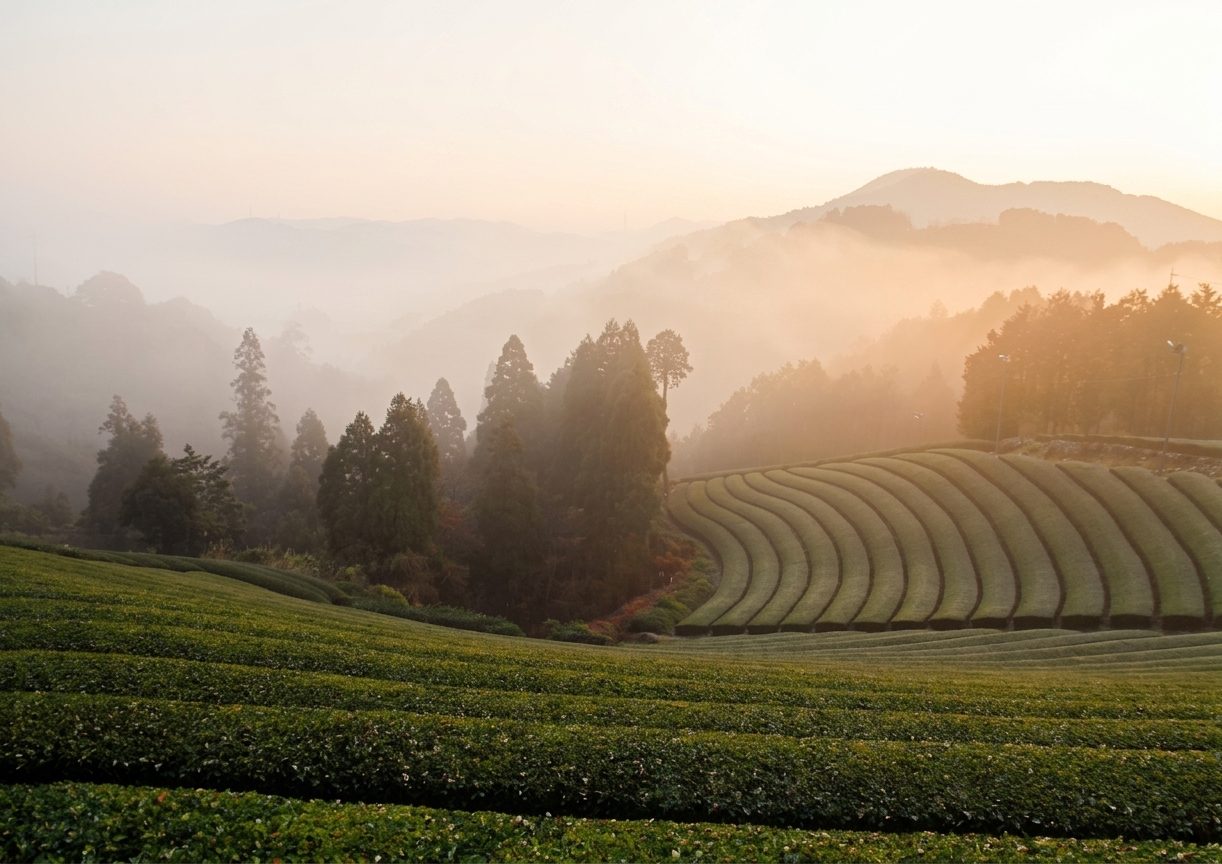
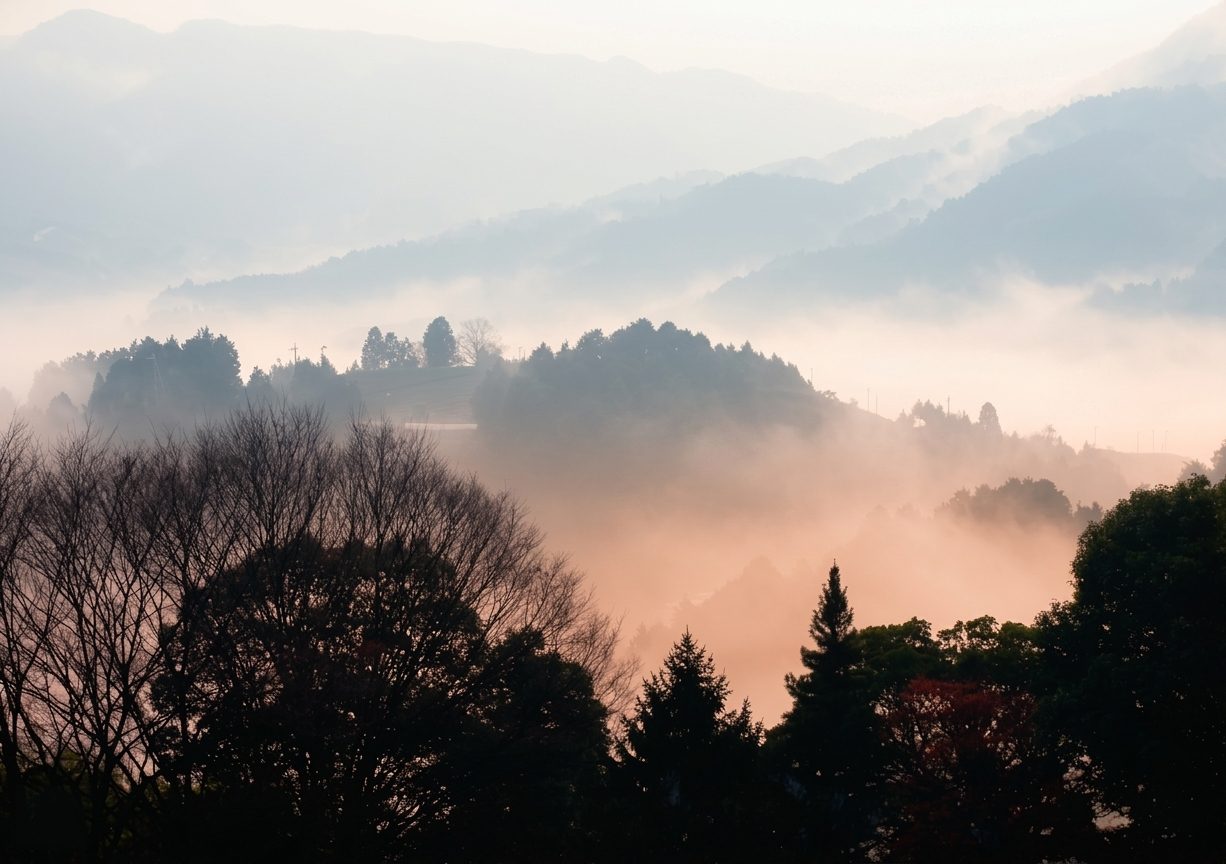
A misty morning from the Ishitera field path
The village in morning mist
The village in morning mist (Shirasu)

Sources: Wazuka Town, “Wazuka tea”; Kyoto Prefecture, Landscape Asset no. 1 (both in the Reference Room).

A RAINY-DAY ROUTE

Seven ways to spend a rainy day

A route from Wazuka no Sato that enjoys the town from under roofs and from the car.

  1. 1

    First, shelter at Wazuka no Sato with a cup of tea

    The cafe at Wazuka no Sato Station has 14 seats indoors, with big windows on every side looking out on the rain-washed green. Try the Wazuka tea parfait (¥680), the extra-rich matcha latte (¥780) or the free Wazuka hojicha. Meals are home cooking by the women of the town: the daily lunch (from ¥900), set meals with seasonal tempura and tea soba (from ¥1,680) or a curry made with premium Wazuka sencha (¥1,500). The farm shop sells Wazuka tea and local vegetables and preserves.

    Source: This site (Eat / Access)

  2. 2

    To the tea fields without walking: the green slow-mobility tour

    A small electric vehicle that leaves from the Tourist Information Centre in Kamatsuka and takes you slowly round the tea-field area, including the Japan Heritage Ishitera tea fields. Each run takes about 75 minutes with up to four passengers; adults ¥1,000, children ¥500, under-6s free (discount for bus users). Runs on weekends and holidays; book by phone (0774-78-0300), same-day seats if available. Runs may be cancelled depending on the weather — on a rainy day, call the centre before you set out.

    Source: Wazuka Town and the Tourist Information Centre (official)

  3. 3

    A whole view of the fields from under a roof: the private tearoom Tenku Cafe

    A tearoom at the top of Ikuji-ga-oka Park, reserved for one group per hour. Its octagonal tatami room, modelled on the Kasa-tei tearoom of Kodai-ji (an Important Cultural Property), fills its windows with the tea fields of Wazuka. On a rainy day you watch the rain on the glass and the rows fading into mist from dry tatami. ¥550 for one, ¥1,100 for two, ¥1,650 for three or more (tax incl.). Check in and collect the key at Wazuka Cha Cafe below, where drinks are ordered too. There are many steps, so mind your footing; for rainy-day use, check with Wazuka Cha Cafe (0774-78-4180).

    Source: Wazuka Cha Cafe booking page; Iitoko Wazuka

  4. 4

    To the sound of rain: the "Rainy days" scene of the travel music

    The Travel Music in Gallery & Music has pieces chosen for rainy days: Ryuichi Sakamoto’s "energy flow" over a cup of tea at the cafe; Joe Hisaishi’s "The Path of the Wind" on a lane through the village in light rain; Bach’s "Air on the G String" with the first cup of the morning; Enya’s "Only Time" while the valley fades into rain and mist outside the window. "One Summer’s Day" and "Amazing Grace" carry the rainy-day tag too. Audio plays from the rights holders’ official YouTube.

    Source: This site (Gallery & Music)

  5. 5

    Even in the rain, from under a roof: the Ishitera viewing facility

    The Ishitera tea fields are Kyoto Prefecture’s first registered Landscape Asset and a component of the Japan Heritage story. The viewing facility the town completed in 2025 has parking for 29 vehicles (25 cars, 2 light cars, 2 mid-size buses), toilets and a guard rail along the path. From the roofed rest space you look out on rows deepened in colour by the rain and mist moving across the hillside. The site is cleaned by the people of Ishitera — please take your litter home.

    Source: Wazuka Town (official); roofed rest space confirmed by the Station

  6. 6

    The drive itself is a treat — but the road is narrow, so take care when passing

    It is about six minutes by car from Wazuka no Sato to the Ishitera viewing facility. Past the hamlet of Shirasu the tea rows close in on both sides of the road, and on a wet day the leaves look greener still. The lanes through the hamlets and between the fields are narrow, so take care when meeting oncoming cars: give way where there is room, and let farm vehicles pass first. The tea fields are farmers’ workplaces — stay out of private land and park at the facility.

    Source: This site; advice from the Station

  7. 7

    The reward: a rainbow after the rain

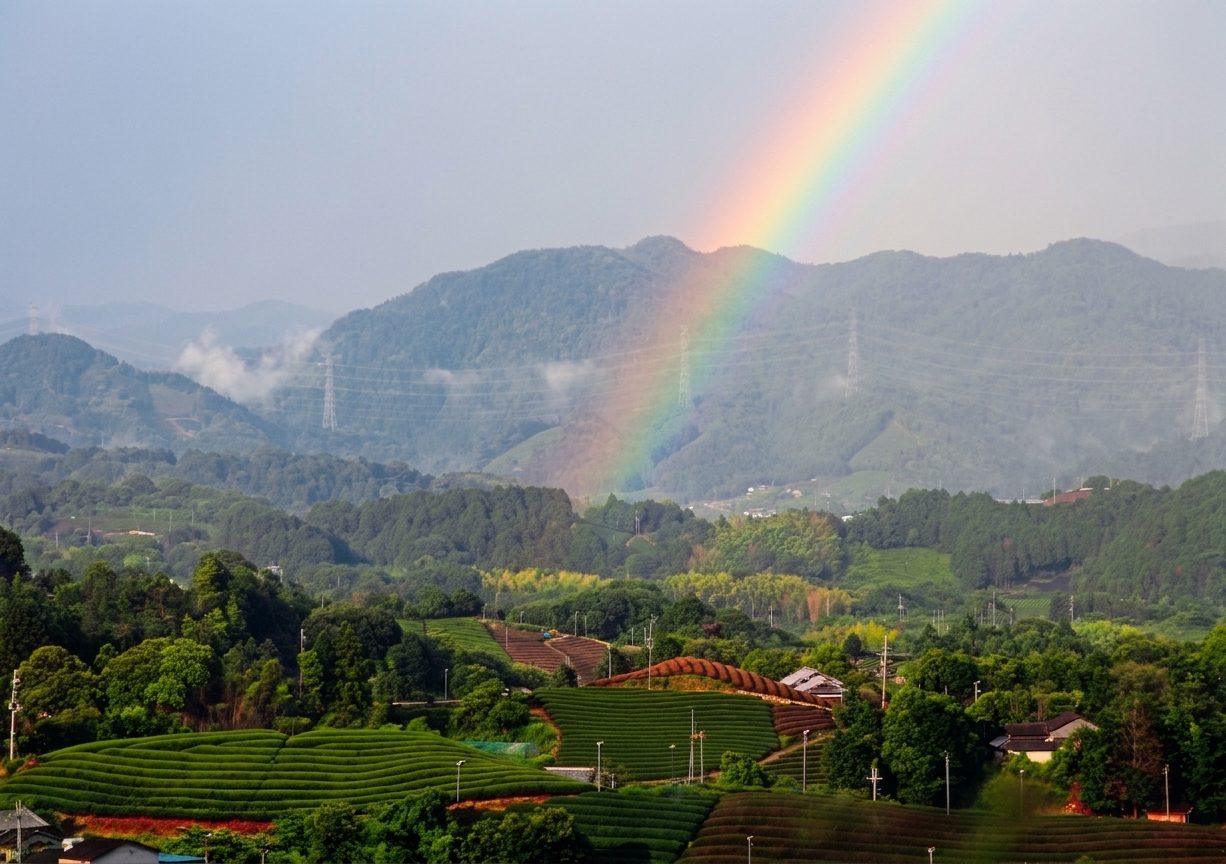
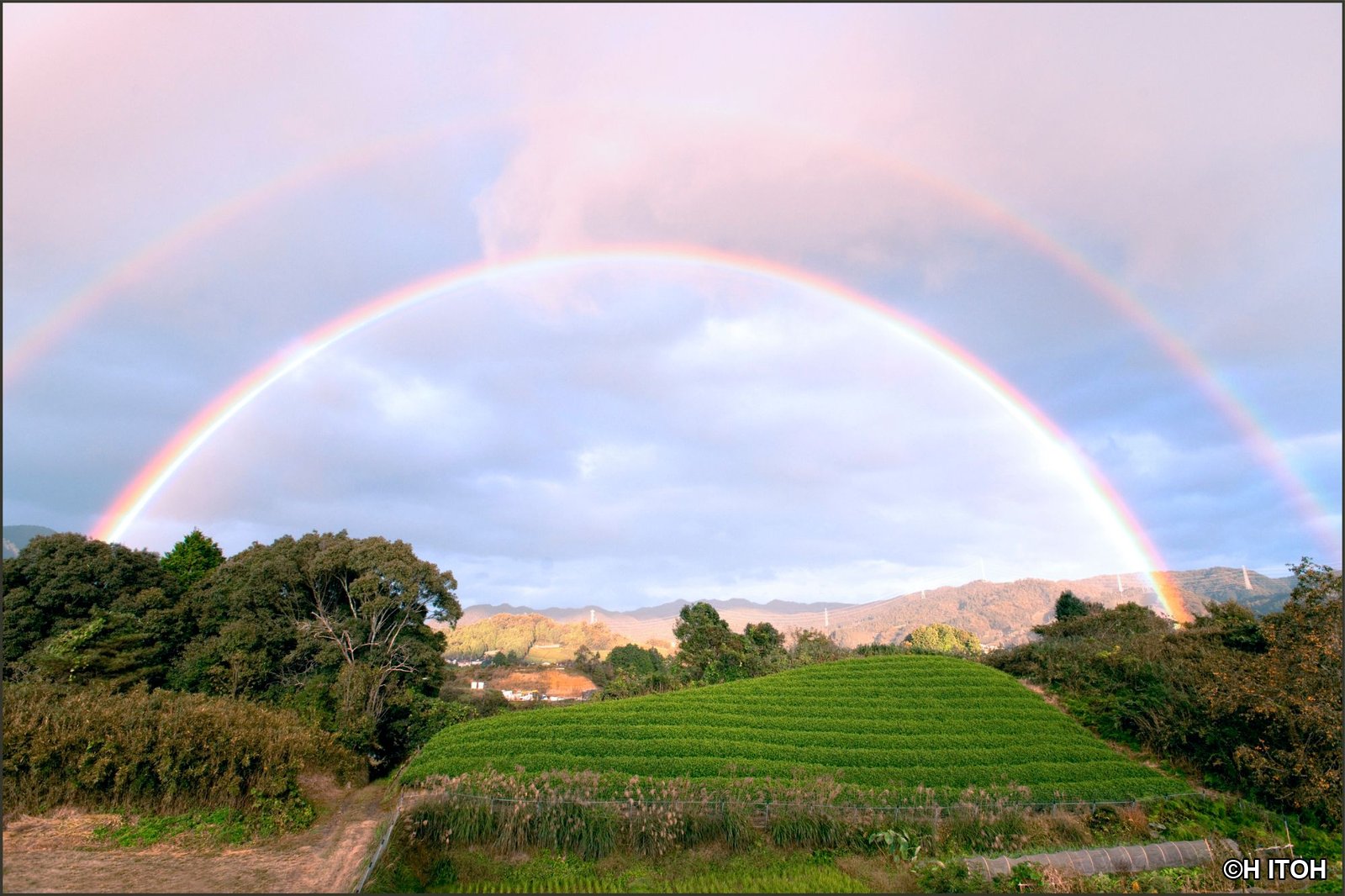
    When the rain stops and the clouds break, look towards the hills of tea. The photo gallery holds two rainbows over the fields after rain — one over Shirasu and a great double rainbow over the rows. They are rare, which is why seeing one counts as luck.

    Source: This site’s photographs

A rainbow over the Shirasu tea fields
After the rain: a rainbow over the Shirasu tea fields
A great rainbow over the tea fields
A great double rainbow
MORE FOR WET DAYS

More for a wet day in Wazuka

A rainy day is the day to stay the night

On a wet day, rather than hurrying round the sights, put your bags down at an inn and let the town set the pace. Tea to the sound of rain, a hot bath in the evening, and next morning the sight of mist drifting over the washed tea fields from your window — a reward kept for those who stay, and one you can only have because it rained. Kyoto Wazuka-so in Shirasu is built around “enjoying tea with all five senses”: a bath floated with sencha, tea kaiseki meals, tea-scented incense and a morning cup (as described by the Wazuka Revitalisation Centre) — warm a rain-chilled body in a bath that smells of tea. Atsuan, a farmhouse inn in Shirasu run by a couple who moved to Wazuka, takes one group a day (two in busy seasons) in a carefully restored main house and gallery, with indoor experiences such as pottery on the second floor (a teacher with 30+ years’ experience, ¥5,000) and matcha art to fill a rainy afternoon.

Travel Wazuka from home or your room

Gallery & Music holds 15 television segments about Wazuka, 82 photographs, drone films, travel music and a lounge that pairs photos with music — for the hours the rain keeps you in, and for planning the next clear day.

BEFORE YOU GO

Rainy-day cautions and what to bring

  • The tea fields and farm lanes are workplaces: keep out of private land and do not photograph people at work up close.
  • Lanes through the hamlets and fields are narrow, and visibility drops in rain. Give way when passing and let farm vehicles through first.
  • The banks of the Wazuka River lie within the prefecture’s flood-inundation zone. Keep away from the river in heavy rain or high water.
  • The Harayama area is closed to visitors.
  • The green slow-mobility tour and the seasonal buses may be cancelled because of the weather.
  • Tenku Cafe is reached by many steps that get slippery in rain — bring an umbrella and shoes with grip.
  • Hours, prices and events can change; check with each place before you go.

Bring: an umbrella or rainwear, non-slip shoes, a towel and a layer to put on — misty days are cool.

Shelter from the rain at Wazuka no Sato

Begin and end the day at Wazuka no Sato Station — a warm cup of Wazuka tea and home cooking by the women of the town are waiting. While you wait out the rain, gather ideas from this site and plan where to go next: Wazuka Through the Year, Gallery & Music and the FAQ are good places to start.

Come Back Again

Next in Season

Upcoming seasonal highlights and events, here and around the town — a guide for planning your next visit. For dates and details, see Wazuka Through the Year.

    Found a season for your next visit? Wazuka changes with every month — we look forward to welcoming you back.

    Disclaimer